Best Time to Visit a Merzouga Desert Camp
There's no bad time to see the Sahara, but there are very different experiences depending on when you go. A night in a Merzouga desert camp in January means warm afternoons and near-freezing nights; in July it means scorching days and a warm night under the stars. This guide walks through the year so you can choose the season that suits you — and prepare for it.
The Quick Answer
For most travellers, the best time to visit a Merzouga desert camp is spring (March to May) or autumn (late September to November). Days are warm rather than hot, nights are cool rather than cold, and the light on the dunes is at its best. These are also the busiest periods, so book early.
Winter (December to February) is a good choice if you don't mind cold nights. Summer (June to August) is possible, but only if you're comfortable with extreme heat in the afternoon.
Merzouga's Climate in a Nutshell
Merzouga has a hot desert climate. It rains very little, skies are clear most of the year, and there's a big difference between day and night temperatures — often 15°C or more. The figures below are typical averages and real conditions vary from year to year and day to day.
| Season | Typical daytime | Typical night | In one line |
|---|---|---|---|
| Winter (Dec–Feb) | around 16–20°C | around 2–6°C, can drop near freezing | Pleasant days, cold nights |
| Spring (Mar–May) | around 23–33°C | around 10–18°C | Ideal, but windier |
| Summer (Jun–Aug) | often 40°C+ | around 25–28°C | Very hot, quiet camps |
| Autumn (Sep–Nov) | around 22–35°C | around 10–20°C | Ideal, stable weather |
Spring: March to May
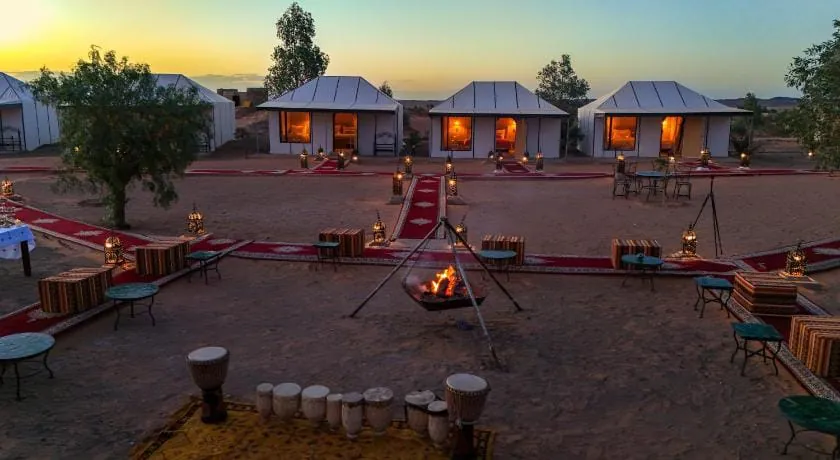
Spring is the most popular season. Temperatures climb from comfortable in March to properly warm in May, and the evenings at camp are pleasant enough to sit outside by the fire without a heavy coat.
The one drawback is wind. Spring is the season when sandstorms are most likely. Most are short, but they can obscure the sunset and make the camel ride uncomfortable. A scarf and sunglasses are essential.
Easter and the European spring holidays bring the biggest crowds of the year, so the best tents in comfort and luxury camps can be fully booked weeks in advance.
Summer: June to August
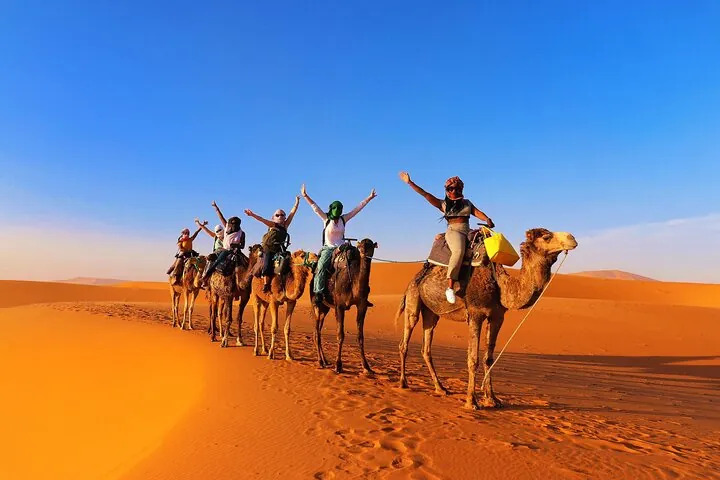
Summer afternoons in Merzouga are extremely hot, regularly above 40°C. Camel treks leave later in the day to avoid the heat, and the midday hours are best spent in the shade.
The upside: nights are warm and ideal for sleeping out under the stars, the camps are quieter, and availability is easier. If you visit in summer, choose a camp with good shade and ask about ventilation or air conditioning in the tents, drink far more water than you think you need, and avoid being out in the sun in the middle of the day.
Autumn: September to November
Autumn is arguably the best-kept secret. The summer heat eases through September, and October and November bring warm, stable days and cool nights, with fewer sandstorms than in spring.
Late autumn nights get cold, so pack a warm layer from November. Occasional storms can bring rare rain to the region in autumn; they rarely last long.
Winter: December to February
Winter days in Merzouga are sunny and mild — perfect for walking on the dunes. The nights are a different story: temperatures can drop close to freezing, and a tent without heating can feel very cold.
If you travel in winter:
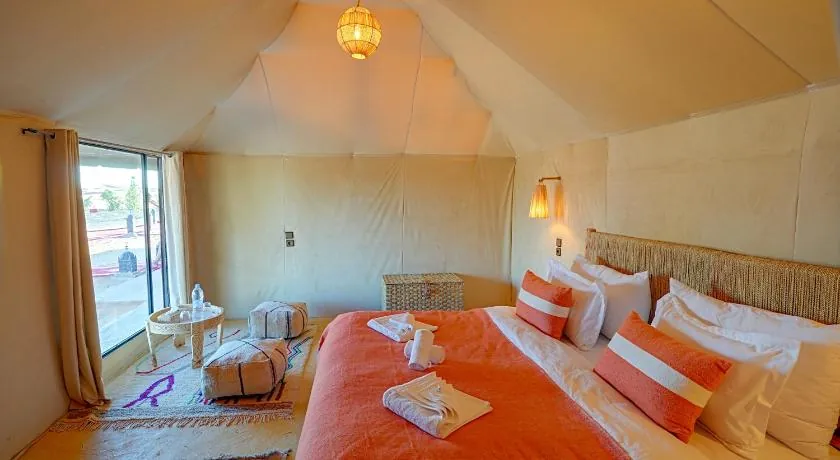
- Choose a camp with good bedding and plenty of blankets, and ask about heating in the tent.
- A private bathroom with hot water makes a real difference; see Luxury vs Budget Desert Camp in Merzouga.
- Pack a warm jacket, hat and warm socks for the evening and for sunrise.
The Christmas and New Year period is one of the busiest of the year. Book well ahead.
The Best Time for Stargazing
The dark skies over Erg Chebbi are one of the highlights of a night in the desert. For the best stargazing:
- Check the moon phase. A few days either side of the new moon gives the darkest sky. A full moon is beautiful over the dunes but hides most of the stars.
- Pick a clear, still night. Autumn and winter tend to have the most stable skies. Wind in spring can bring dust.
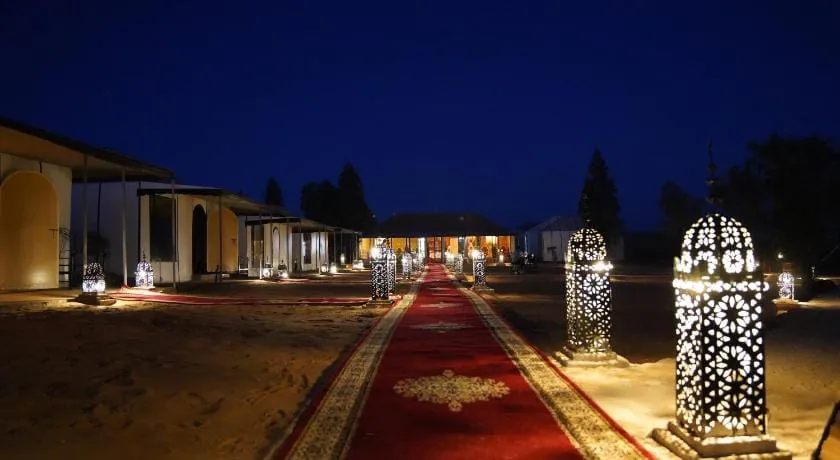
- Walk away from the lights. Even a few minutes from the camp lanterns makes a big difference.
The Best Time of Day
Whatever the month, the best part of the day in the desert is the same: the late afternoon light, sunset and the hour after, and then sunrise. That's why a camel trek into the dunes is timed to reach a high point just before sunset. Plan to arrive in Merzouga with plenty of time to spare — the trek start time moves through the year with the sunset. Read our complete guide to Merzouga camel trekking for more.
How the Season Affects Prices
Demand follows the weather. Spring, autumn and the end-of-year holidays are the busiest periods, and prices and availability reflect that. Summer and some weeks in winter are quieter. For a detailed breakdown of what drives the price, read How Much Does a Merzouga Desert Camp Cost?.
What to Pack by Season
- All year: sunglasses, sun cream, scarf or headscarf, torch, closed shoes, small overnight bag.
- Winter: warm jacket, hat, gloves, warm socks and a layer to sleep in.
- Spring and autumn: a fleece or light jacket for the evening, and a scarf against the wind.
- Summer: light long-sleeved clothing, a hat, and plenty of water.
Planning Your Visit
Once you've picked your dates, the next step is choosing the right camp and figuring out the journey. Our guide to Merzouga desert camps explains the types of camp, and how to get to Merzouga covers the routes from Marrakech, Fes, Ouarzazate and Errachidia.