Riding a camel into the Erg Chebbi dunes at the end of the day is the classic way to arrive at a desert camp. Here’s how the experience works, from the meeting point to the ride back after breakfast.
Camel trekking in Merzouga is usually combined with a night in a desert camp: you ride in for the sunset, sleep at the camp and ride out again the next morning. Below is the typical sequence. Exact timings depend on the season and on where your camp is in the dunes, so we confirm them with your booking.
1. The Meeting Point in Merzouga
Everything starts at a meeting point on the edge of the dunes, usually in or near Merzouga village. If you drive yourself, you park here and your car stays until you come back. If you’re arriving with a driver or transfer, they bring you to the same place. This is where you repack into a small overnight bag: camels carry riders, not suitcases. We send the exact meeting point and time after booking; our how to get to Merzouga page covers the journey there.
2. The Camel Ride
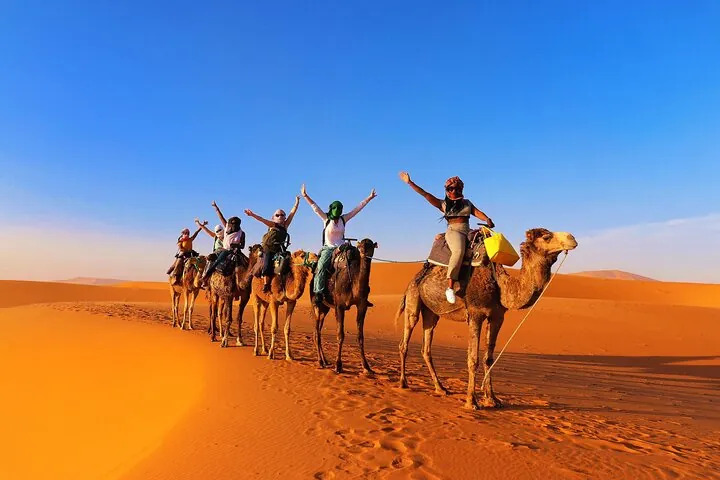
Your guide — usually a local from the area, on foot — leads the camels in a line. Getting on is simple: the camel is kneeling, you sit in the saddle, hold the handle and lean back as it rises back legs first. After that, the pace is slow and rocking. Most people relax within a few minutes and start taking photos.
3. Into the Dunes of Erg Chebbi
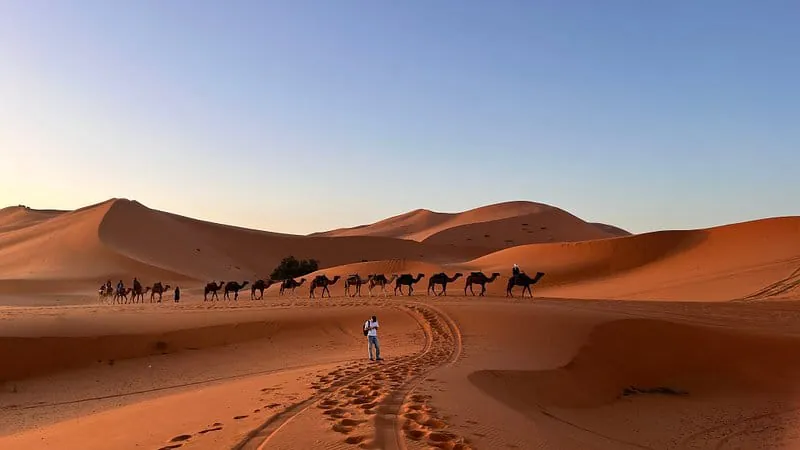
Erg Chebbi is a sea of orange sand dunes, some well over 100 metres high, with the village and the road quickly disappearing behind you. The colour of the sand changes constantly with the angle of the sun, which is why the late-afternoon ride is so popular.
A camel caravan crossing Erg Chebbi in the late afternoon.
4. Sunset
Before reaching camp, the caravan usually stops so you can climb a dune and watch the sun go down. It is steeper than it looks: walk up along the crest rather than straight up the face. Take a moment without the phone too — the silence is part of it.
5. Arriving at the Desert Camp
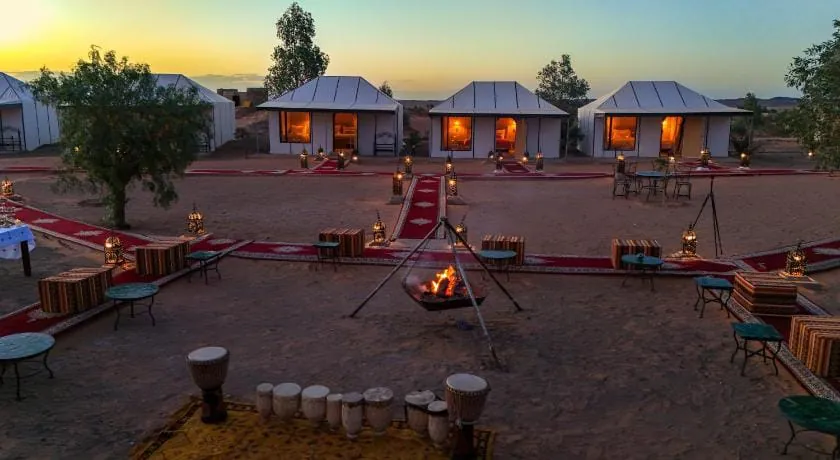
You reach camp around dusk, as the lanterns are being lit. There’s time to settle into your tent and warm up with mint tea. To choose where you’ll sleep, compare our Merzouga desert camps.
6. Dinner
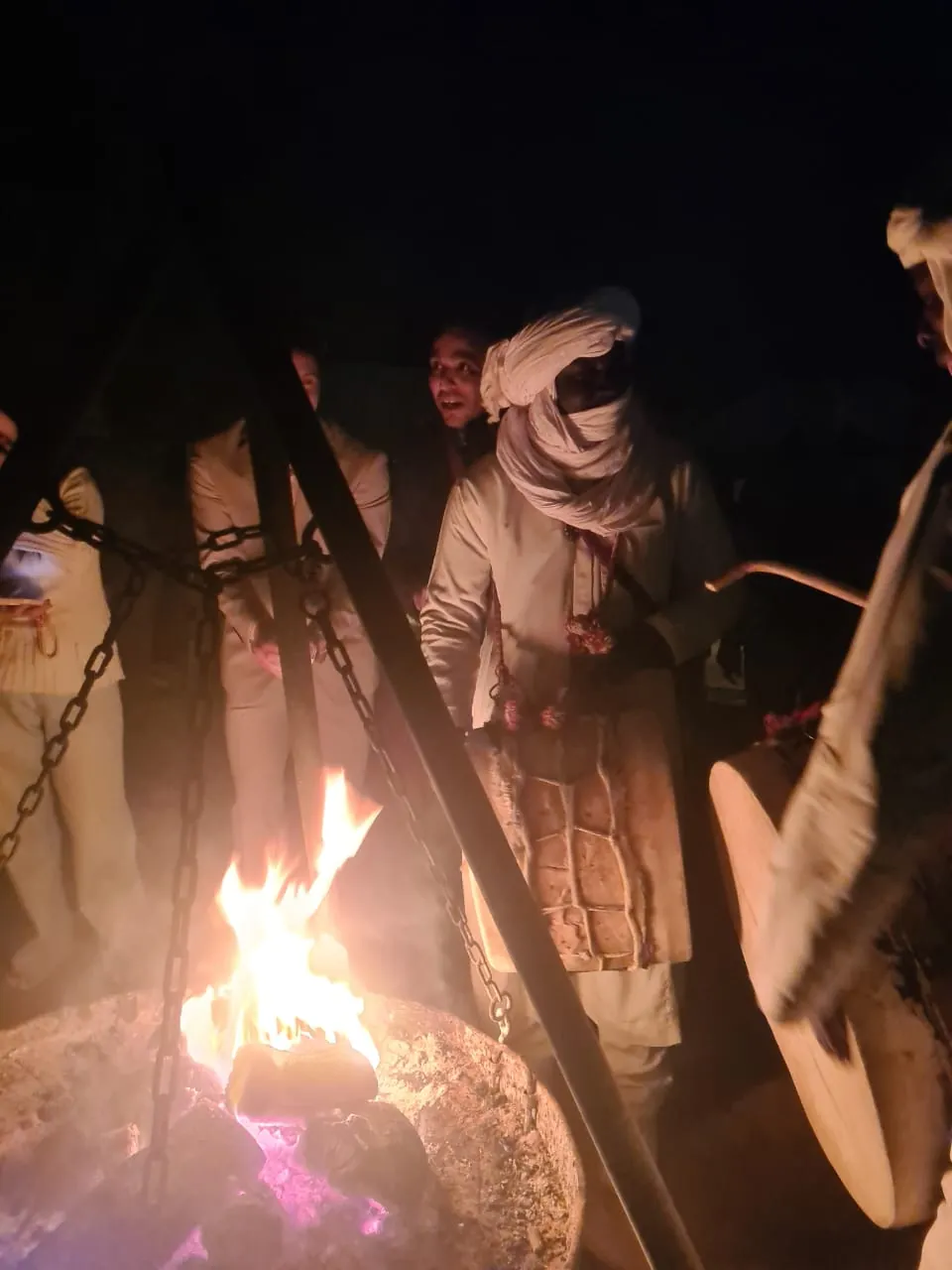
Dinner is served at the camp in the evening — a Moroccan meal that usually includes soup, salads and a main dish such as tagine. Afterwards many camps gather guests around the fire for drumming and music.
7. A Night in the Sahara
Once the fire dies down, look up. With very little artificial light around, the night sky over the dunes is one of the highlights of the trip. Nights can be cold, especially from November to March, so keep a warm layer to hand.
8. Sunrise
Get up before dawn and climb the nearest dune. Sunrise is quieter than sunset and the light on the sand is softer — many guests end up preferring it.
9. Breakfast
Breakfast is served at camp after sunrise, typically with bread, Moroccan pancakes, jam, tea and coffee.
10. The Return
After breakfast you ride back (or take the 4x4) to the meeting point, collect your car or luggage and continue your journey. If you have a long drive ahead, that morning return makes an early start easy.
Choose the right camp for your trek
Camps You Can Reach by Camel
The trek is only half of the experience — where you sleep matters just as much. Compare authentic, comfort and luxury options and tell us if camel trekking is a must.
For travelers looking for a simple and traditional Sahara experience. Send us your date, number of guests and budget, and we will reply with the authentic camps that have space.
For travelers looking for more comfort and facilities. Send us your date, number of guests and budget, and we will reply with the comfort camps that have space.
No. The camels walk in a line, led on foot by a guide, at a slow and steady pace. The only moments that need attention are when the camel stands up and sits down: lean back and hold the handle firmly.
How long is the camel ride to the camp?
It depends on where the camp is located in the dunes and on the route your guide takes. We confirm the approximate duration for your camp when you book.
What time does the camel trek start?
The trek is timed around sunset, which changes through the year, so the meeting time is earlier in winter and later in summer. We send the exact time for your date with your booking confirmation.
Can children ride a camel?
Children often ride, sometimes sharing with a parent, but it depends on their age and on the camp. Tell us the children’s ages and we will confirm what is possible and suggest a 4x4 alternative if needed. See desert camps for families.
What if I don’t want to ride a camel?
Many camps can also be reached by 4x4. You can still walk up a dune for the sunset and enjoy the same evening at camp.
What should I wear for the camel ride?
Long, comfortable trousers, closed shoes or secure sandals, sunglasses and a scarf or headscarf to protect against sun and wind-blown sand. Take a warm layer for the evening. Keep your bag small — large suitcases can’t go on the camels.
Is there a weight limit or health restriction?
Camel riding is not recommended for everyone, for example during pregnancy or with back problems. If you have any concern, tell us before booking and we’ll suggest the best option, such as a 4x4 transfer.