Merzouga Camel Trekking: Complete Guide
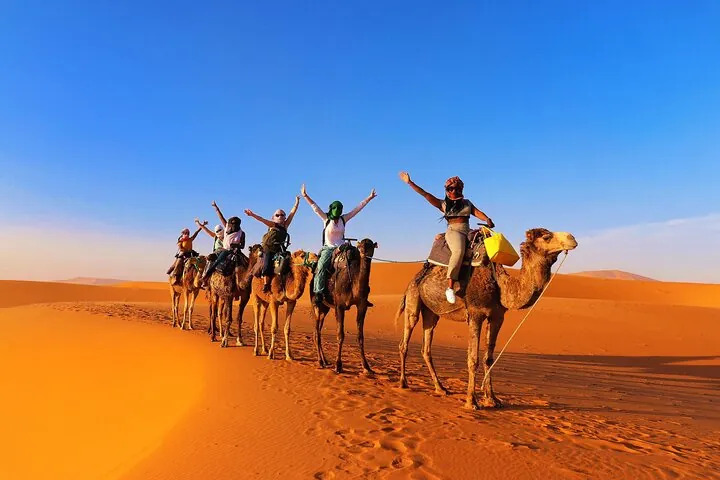
For most visitors, riding a camel into the dunes of Erg Chebbi is the moment the trip to Morocco becomes the trip they'll talk about for years. It's also something almost nobody has done before. This guide covers what to expect, how to choose the right trek and how to get the most out of it — from the first wobbly moment in the saddle to sunrise on top of a dune.
If you want the step-by-step of a standard overnight trek (meeting point, sunset, camp, return), see our Merzouga camel trekking page. This guide goes deeper into the practical side.
Where Camel Treks in Merzouga Go
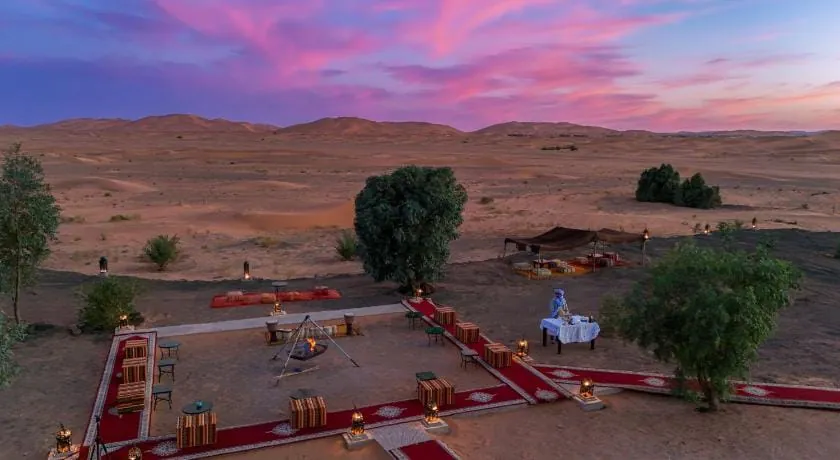
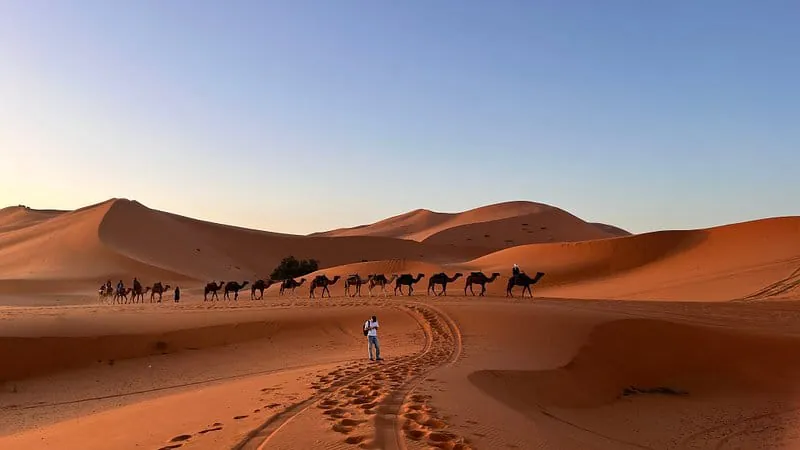
Merzouga sits at the western edge of Erg Chebbi, a sea of wind-sculpted sand dunes in south-eastern Morocco. The highest dunes rise well over 100 metres above the surrounding plain, and their colour shifts from pale gold at midday to deep orange and red in the evening. Treks leave from the edge of the dunes near the village and head into Erg Chebbi, where the desert camps are set up in sheltered spots between the dunes.
The Main Types of Camel Trek
Overnight trek to a desert camp
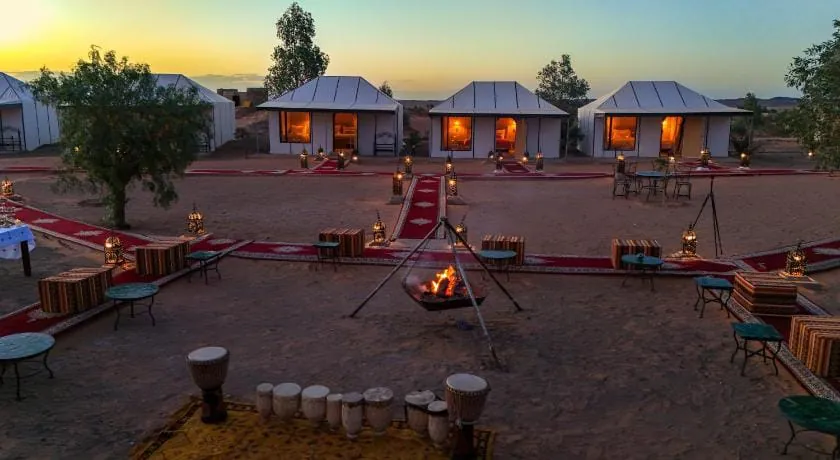
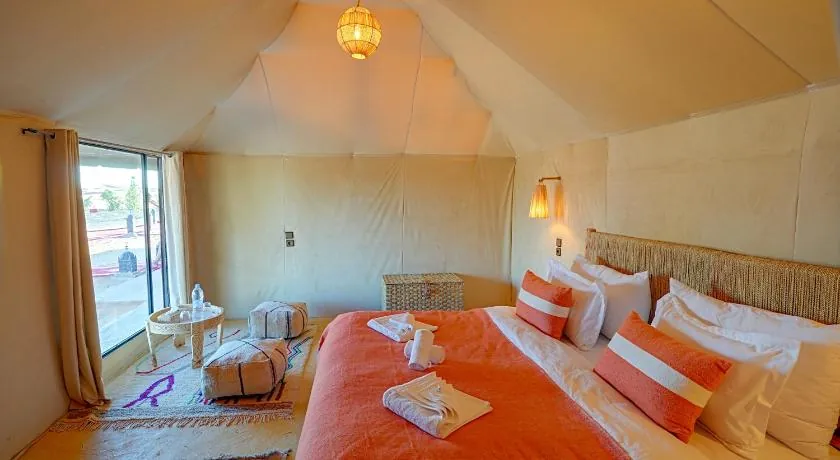
The classic. You ride out in the late afternoon, stop for sunset, spend the night at a camp and ride back after sunrise and breakfast. It's the best option for most people because you see the dunes in both of their best lights, evening and morning. Compare desert camps to choose where you'll sleep.
Sunset ride
A shorter ride out into the dunes to watch the sunset, then back to your hotel in Merzouga. Good if you're short on time or don't want to spend a night at camp — though you'll miss the stars and the sunrise.
Sunrise ride
The same idea at the other end of the day: an early start, a ride into the dunes in the dark and the sunrise from a dune top. Quieter and cooler than sunset.
Longer, multi-night treks
For travellers who want a more nomadic experience, longer treks spend several days moving through the desert and sleeping in different places. These require more fitness and a tolerance for simple conditions.
What Riding a Camel Actually Feels Like
People are often nervous before their first ride. There's no need: the camels walk in a line, tied one behind the other, and a guide leads the first one on foot. You don't steer, and the pace is a slow walk.
The only moments that need attention are getting up and sitting down:
- Getting on. The camel is kneeling. Swing a leg over the saddle, sit well back and hold the metal handle in front of you.
- Standing up. The camel rises back legs first, which tips you forward, then front legs, which tips you back. Lean back and hold on. It's over in two seconds.
- Riding. Relax your hips and move with the rocking motion rather than stiffening against it. Keep your feet in the stirrups if there are any, or let your legs hang naturally.
- Getting off. The reverse: lean back as the front legs fold, then lean forward slightly as the back legs follow.
After a longer ride you may feel it in your inner thighs and lower back the next day. That's normal.
What to Wear and Pack
Clothing
- Long, loose trousers. They prevent chafing against the saddle and protect from the sun. Shorts are uncomfortable on a camel.
- Layers. Hot in the afternoon, cold at night for much of the year. A fleece or warm jacket is essential from October to April.
- A scarf or headscarf. Protects from sun and wind-blown sand. Your guide can show you how to tie it the traditional way.
- Closed shoes or secure sandals. You'll walk in soft sand and climb dunes. Flip-flops tend to get lost.
In your bag
Pack a small backpack for the night. Large suitcases can't go on the camels; they stay at the meeting point or go to camp by 4x4, depending on the camp.
- Sunglasses and sun cream
- Water (though camps have water, it helps on the ride)
- A torch or head torch
- A warm layer and something to sleep in
- Toothbrush, wet wipes, any medication
- Phone and a power bank; not every camp has sockets in every tent
- A zip bag to protect your phone or camera from sand
Getting the Best of Sunset and Sunrise
- Climb a dune. The caravan usually stops so you can walk up a dune. Walk along the crest where the sand is firmer, not straight up the face.
- Turn around. The best light is often behind you, on the dunes opposite the sun.
- Stay after the sun sets. The colours in the sky can be strongest ten or fifteen minutes after sunset.
- Set an alarm for sunrise. Get up before first light and climb the nearest dune. It's quieter, cooler and often more beautiful than sunset.
Photography Tips
- Shadows are the subject. The long shadows of the caravan on the sand are the classic shot. Shoot from a dune above the caravan, or ask your guide to let you walk ahead.
- Protect your gear. Sand is the enemy of zoom lenses and phone ports. Change lenses inside a bag or not at all.
- Night sky. For star photos you'll need a tripod or a steady surface and a long exposure. Walk a few minutes from the camp lights.
- Ask before photographing people. Guides and camp staff are usually happy to be photographed, but always ask first.
Camel Welfare: What to Look For
Camels are working animals and good operators look after them. Signs of good care include camels that look well fed, with padded saddles and no visible wounds; guides who walk at the camels' pace; and reasonable loads — one rider per camel, with luggage taken separately. If something looks wrong to you, say so. Choosing operators that treat their animals well is the best way to encourage good practice.
Who Can Ride — and the Alternative
Most people can ride, but a camel trek isn't for everyone. It isn't recommended during pregnancy, with back problems or certain health conditions. For young children, it depends on age and size. If riding isn't right for you, many camps can be reached by 4x4, and you can still walk up a dune for the sunset. Planning with children? See Merzouga desert camps for families.
Common Mistakes First-Timers Make
- Arriving late. The trek is timed for sunset. Leave enough margin for the long drive to Merzouga — see how to get to Merzouga.
- Bringing too much. A suitcase on a camel isn't an option. Pack a small overnight bag.
- Underestimating the cold. Desert nights are cold for a large part of the year. Bring a real warm layer.
- Wearing shorts. You'll regret it after half an hour in the saddle.
- Skipping sunrise. It's the quieter half of the experience and many guests' favourite.
- Not asking what's included. Whether the camel ride is included, the bathroom arrangements and the meals vary between camps. Check before you book — our camp prices page shows what differs between categories.
When to Go
Spring and autumn offer the most comfortable temperatures for a trek. Winter days are pleasant but nights are cold; summer afternoons are extremely hot, so treks start later in the day. Our guide to the best time to visit a Merzouga desert camp goes month by month.